Which option do you pick?
Thanks for the fun exercise, Rick Mallery.
Which option do you pick?
Thanks for the fun exercise, Rick Mallery.
Came across Fox’s site today and particularly enjoyed Green Day’s song “The American Dream is Killing Me.”
Take a listen 🙂


 I recently helped Kevin Damask revamp his book “Cold: The Unsolved Murders of Seven Young Women” and thought you might like to meet the author of this interesting book.
Kevin Damask has worked as a writer and journalist for 20 years. Damask earned a bachelor’s degree in journalism from the University of Wisconsin-Oshkosh. His work has been awarded nine times from the Wisconsin Newspaper Association. Since 2022, Damask has worked as a writer-editor for the U.S. Department of Veterans Affairs’ My Life, My Story program. He lives in Sun Prairie, Wisconsin with his wife, Jenny, and son, Jackson.
 kevindamask.substack.com.
You can pick up Kevin’s book at indiebound or amazon. for those true crime lovers in your life.
And don’t forget to leave a review online at your favorite book seller. Reviews are the lifeblood of indie-authors.

I saw the author name on this audio book at my library and didn’t remember she’s the author of the Maisie Dobbs mysteries, but I picked it up anyway. I knew it was familiar.
Stats: Published in March of 2023, print book is 321 pages, audio book is 8 discs/10 hours read by Orlagh Cassidy.

Blurb:
A reluctant ex-spy with demons of her own, Elinor finds herself facing down one of the most dangerous organized crime gangs in London, and exposing corruption from Scotland Yard to the highest levels of government.
Post-World War II Britain, 1947. Forty-one-year-old “Miss White,” as Elinor is known, lives in a village in Kent, England, so quietly and privately as to seem an enigma to her fellow villagers. Well she might, as Elinor occupies a “grace and favor” property, a rare privilege offered to faithful servants of the Crown for services to the nation. But the residents of Shacklehurst have no way of knowing how dangerous Elinor’s war work had been, or how deeply their mysterious neighbor continues to be haunted by her past.
It will take the child of Jim Mackie, a young farmworker and his wife, Rose, to break through Miss White’s icy demeanor—but Jim has something in common with Elinor. He, too, is desperate to escape his past. When the powerful Mackie crime family demands a return of their prodigal son for an important job, Elinor assumes the task of protecting her neighbors, especially the bright-eyed Susie, who reminds her of the darkest day of her life.
Elinor’s wartime training and instincts serve her well, but as she endeavors to neutralize the threat to Jim, Rose and Susie Mackie, she is rapidly led along a tunnel of smoke and mirrors in which former wartime colleagues – who know the truth about what happened in 1944, and the terrible event that led to her wartime suicide attempt – are compromised by more powerful influences.
Ultimately, Elinor will hold a gun to the head of a Mackie crime lord to uncover the truth behind the family’s pursuit of Jim, and in doing so, reveal the far-reaching tentacles of their power—along with the truth that will free Elinor from her past.
What I liked: It was fun how Winspear slowly revealed Elinor’s true nature. Makes you think a bit about the people you meet. Not that you’d expect an elderly neighbor of having such a past, but one never knows. It also made me think about how it really was after the WWII in England. I didn’t realize that prisoners were let out to fight, and when they came home, they had earned their freedom and learned some new skills along the way. Cassidy does a good job with the narration.
What I didn’t like: I’m not sure a friend (and someone who had feelings for Elinor) would have kept secret related to a trauma she underwent in the war. (I won’t say what so as not to give anything away). Keeping secret the operation, yes, but not what happened during the operation that significantly effected Elinor.
Rating: 4/5
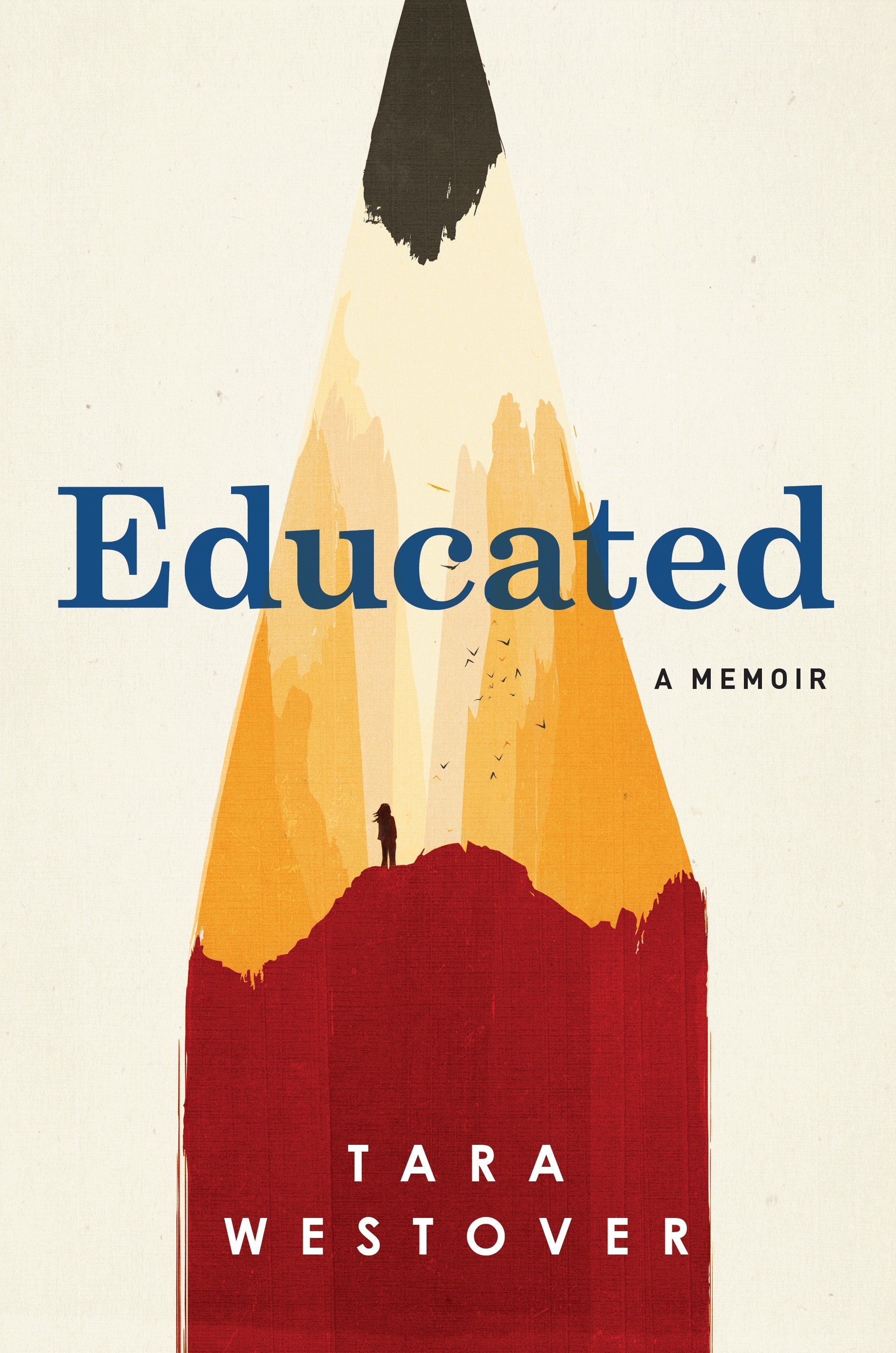 This was available in my local library as an audio book (my favorite way to “read”) and I had wanted to read this for a while. (non-fiction)
Stats: First published in 2018, print book is 352 pages. The audiobook is 12’10” narrated by Julia Whelan.
Blurb: Tara Westover was 17 the first time she set foot in a classroom. Born to survivalists in the mountains of Idaho, she prepared for the end of the world by stockpiling home-canned peaches and sleeping with her “head-for-the-hills bag”. In the summer she stewed herbs for her mother, a midwife and healer, and in the winter she salvaged in her father’s junkyard.
Her father forbade hospitals, so Tara never saw a doctor or nurse. Gashes and concussions, even burns from explosions, were all treated at home with herbalism. The family was so isolated from mainstream society that there was no one to ensure the children received an education and no one to intervene when one of Tara’s older brothers became violent.
Then, lacking any formal education, Tara began to educate herself. She taught herself enough mathematics and grammar to be admitted to Brigham Young University, where she studied history, learning for the first time about important world events like the Holocaust and the civil rights movement. Her quest for knowledge transformed her, taking her over oceans and across continents, to Harvard and to Cambridge. Only then would she wonder if she’d traveled too far, if there was still a way home.
What I liked: What a story! I am just amazed that Ms Westover was able to save herself, and like most stories like this, she had to do this herself. It also speaks of how strong family bonds can be – good or bad. She is an amazing young woman. Luckily, (or was it more than luck), she had people along the way to show her a different way to live. It’s just very hard to read her struggle, especially the verbal and physical abuse. The story is laid out in such a way that it’s hard to put down. Very well-written. Julia Whelan – the narrator – did a wonderful job, as well.
What I didn’t like: The abuse by the brother, Sean, seems like it could have been shortened a bit. We get the point what kind of person he is and what he does to Tara. But maybe Tara had to keep repeating this abuse for herself vs for the reader.
Rating: 5/5
 This was one of my blind picks at my local library.
Stats: Published in 2022, audio book is 7 discs – 8′ 30,” narrated by Aidan Kelly, hardcover is 272 pages
Blurb: In seventh-century Ireland, a scholar and priest called Artt has a dream telling him to leave the sinful world behind. Taking two monks—young Trian and old Cormac—he rows down the river Shannon in search of an isolated spot on which to found a monastery. Drifting out into the Atlantic, the three men find an impossibly steep, bare island inhabited by tens of thousands of birds, and claim it for God. In such a place, what will survival mean?
Three men vow to leave the world behind them. They set out in a small boat for an island their leader has seen in a dream, with only faith to guide them. What they find is the extraordinary island now known as Skellig Michael.
What I liked: This is an interesting book. I have never read any of Donoghue’s other books but the reviews say this is different than her others (she has 9 others). It isn’t a page turner, per se, but it did keep my attention through most of it. It is an interesting perspective/commentary on religion, faith, and humanity. Even though it’s set in the 7th century, it made me think of my own beliefs. Aidan did a nice job with the narration. Each character felt very distinct, which, of course is partly do to the author as well.
What I didn’t like: I’m not sure I understand the point of the whole story; it wasn’t obvious to me, though that doesn’t necessarily make it a bad read. It made it an “it’s all right” read for me. I was just left with a “Huh…” thought when I was done. It’s definitely not for everyone.
Rating: This one is hard to rate, maybe 3.5/5
Nice!

Ah
The leaf
Caught the wind
And learned to dance
Amused were the birds
Who soon joined in the fun
Flowers swayed with wind’s magic
Butterflies, bees, and dragonflies
Making merry in celebration
The humble leaf took a well-deserved bow
©2023 Annette Rochelle Aben


 ckbooksblog